Event-Driven Selling: How to Act on Company Signals
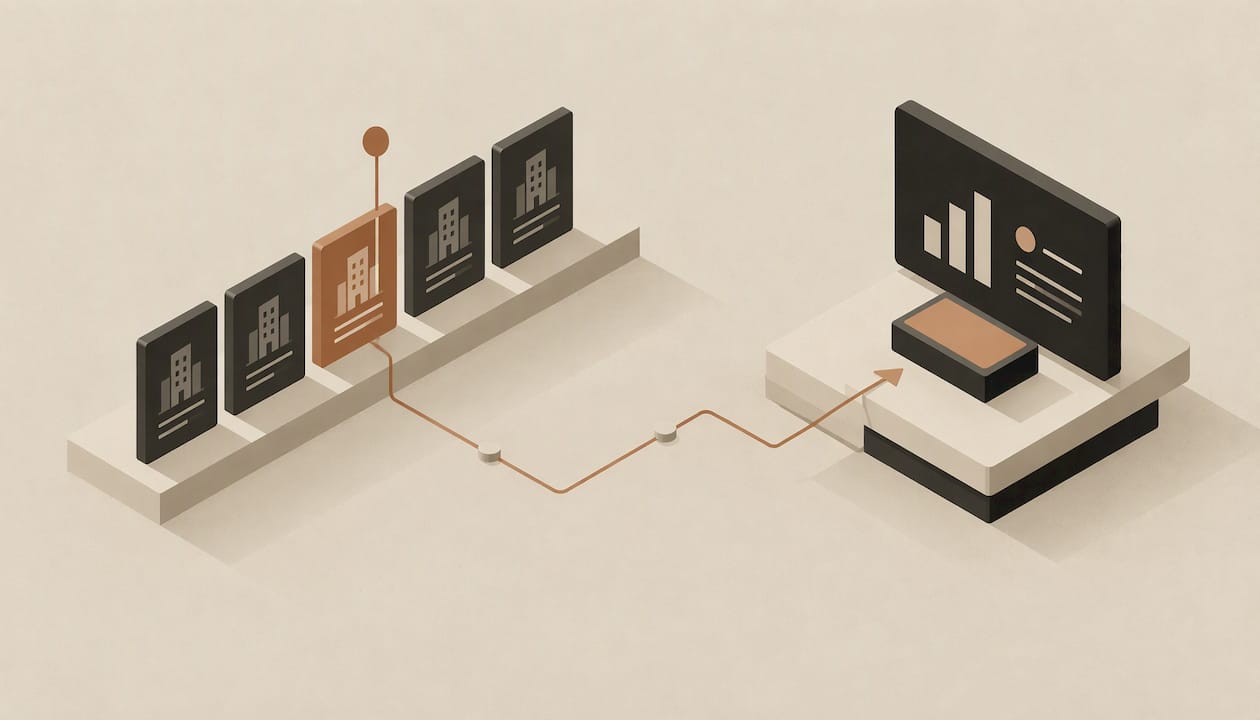
Event-driven selling means starting a sales conversation because something changed at a target company, not because your calendar says it is time to call. A funding round, a new executive, an acquisition or a new facility gives your outreach a reason and a deadline. The method only works when the event is real, verified and tied to the right contact. That takes company data broad enough to see events across industries and countries. It is the kind of data we build Milda around: ownership, financials, growth signals and verified contacts in one place.
TL;DR
- Event-driven selling (also called trigger-based selling or event-based prospecting) means timing outreach to a change at a company that creates a need.
- The best events are those that shift budget, authority or risk: funding, leadership changes, M&A, expansion, regulatory filings.
- Rank events by how fast they decay. Some deserve action within days, others within weeks.
- A signal is a reason to investigate, not proof of a deal. Verify it with a second source and find the person who owns the problem.
- Track which events produced meetings and wins, then drop the signals that do not.
Table of Contents
- What event-driven selling means in B2B
- Why timing changes the odds
- Which company events are worth watching
- How to run event-driven selling step by step
- A worked example
- Measuring the results and avoiding stale signals
- Who else uses events
- Where Milda fits
- Our perspective
- FAQ
- Sources
What event-driven selling means in B2B
In most B2B teams, prospecting follows a list: an industry, a size band, a region. Event-driven selling adds a clock. It asks which accounts on that list have just had a reason to change something.
Craig Elias, who built the Trigger Event Selling method, separates trigger events from mere circumstances. A large customer contract, a change of decision maker, or a competitor’s acquisition or product launch is a trigger. A falling stock price or shrinking margins is only a circumstance: it describes a state, not a moment. That distinction keeps a team from chasing every bit of bad news.
The three phrases people search for mean nearly the same thing:
- Event-driven selling is the whole approach, from detection to the sales conversation.
- Trigger-based selling stresses the moment that creates the buyer’s need.
- Event-based prospecting is the top-of-funnel part: finding accounts to contact because of an event.
One caution on vocabulary. In some sales content, “event” means a trade show or a holiday promotion. Here it means a change at the target company.
Why timing changes the odds
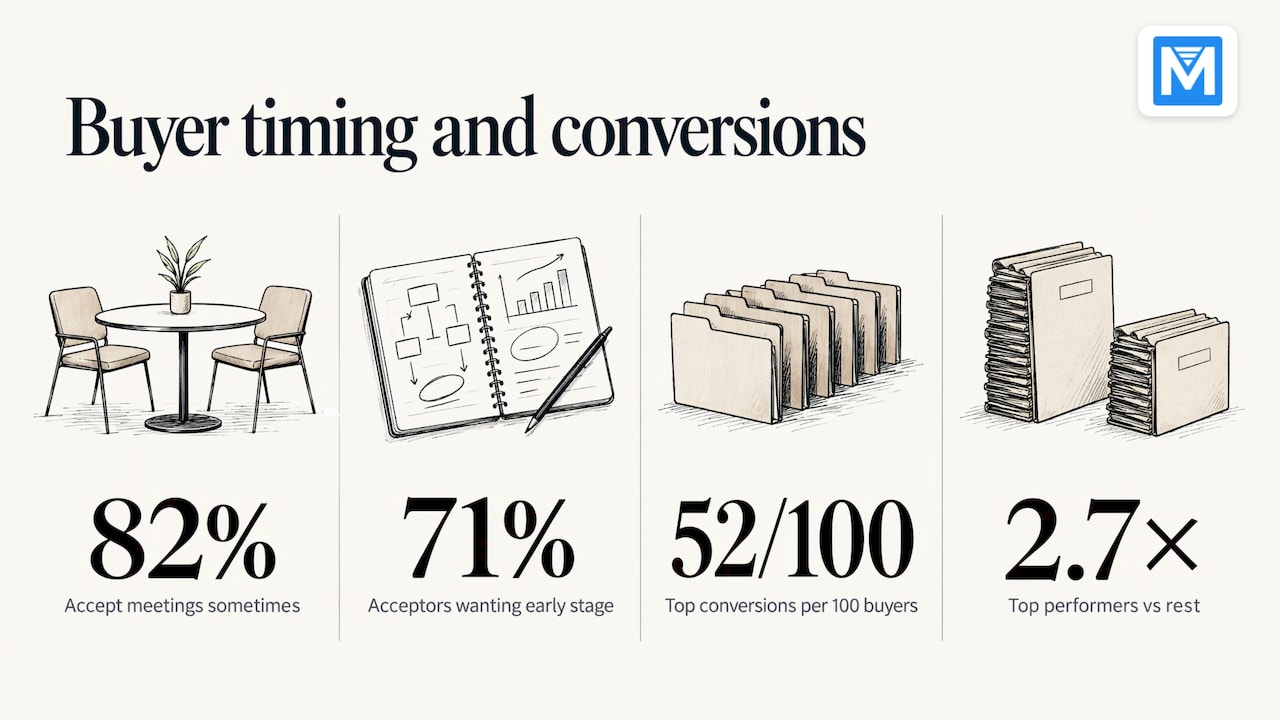
Buyers are not waiting for a perfect pitch. In the RAIN Group’s study of 488 buyers and 489 sellers, 82% of buyers said they accept meetings at least sometimes with sellers who reach out. And 71% of those who accept want to hear from sellers at the earliest part of their buying process, when they are still forming ideas. The same study found top performers generated 52 conversions per 100 buyers targeted, 2.7 times the rest.
An event is the best available proxy for that early moment. It tells you something is moving before a request for proposal exists.
It also helps deals that are already open. Saleshood defines a compelling event as a time-sensitive response to business pressure with consequences for inaction, and reports a 0.8 correlation between deals with a customer-defined compelling event and faster cycles and more wins. It also notes that 85% of deals have no identified compelling event. The lesson for a prospecting team: the event you detect from outside is the first draft of that compelling event. Your job in the first conversation is to learn whether the buyer shares it.
Which company events are worth watching
Not all events carry the same weight. Group them by what they change at the company.
Money events
A funding round, a debt facility, an earnings report with a stated initiative, or a new owner after a buyout all change what a company can spend. Fresh capital usually comes with a plan to deploy it on hiring, product and go-to-market. One outbound playbook rates capital raised as the most actionable signal it reviews, and sets a 48-hour window for funding rounds at companies that match your ideal customer profile.
People events
A new C-level hire or a new head of a function often reopens vendor decisions. New leaders tend to review the tools and partners they inherit. Departures matter too: a layoff in the department you serve changes priorities fast.
Structure events
Acquisitions, mergers, divestitures and changes in shareholders alter who decides and what gets consolidated. These events are also among the best documented. In the United States, public companies file a Form 8-K to disclose material events such as M&A, leadership changes and bankruptcy, generally within four business days. Private companies have no such duty, so ownership and deal data from other sources matters. Our guide to M&A signals covers what to watch and how to act on it.
Expansion events
A new facility, a new market, a patent grant, a surge in hiring or a new product line show where a company is investing. For investment teams and partner scouts, these are the signals that separate a growing target from a static one. Our overview of company growth signals lists what to track.
Risk and pressure events
A competitor’s move, a regulatory change, a credit deterioration or a supply disruption can create urgency. Treat these with care: a falling financial profile might call for a different conversation than a growing one, and for some audiences, such as lenders and analysts, it is the very point.
How to run event-driven selling step by step
The process has five steps. Each one has a common failure.
1. Define the accounts and the events that matter
Start with a target list built on firm-level filters: industry, size, geography, ownership type. Then decide which three to five events matter for your offer. A vendor of logistics software cares about a new warehouse. A corporate innovation team cares about a patent filing or a technology partnership.
Where it goes wrong: watching every event for every company. You get noise and the team stops looking. Firmographic data is only the first filter, as we explain in firmographic data for B2B, and events are the second.
Where Milda helps: with 420 million companies in one database, the account list can span countries and industries without stitching together separate regional sources, and search, a browser extension and an API let you work from the web app or inside your own tools.
2. Detect the event
Sources vary by event: regulatory filings, press releases, job postings, trade data, patent registers, ownership records and news. Doing this by hand across hundreds of accounts is slow, and the slowest part is the delay: by the time an event reaches a general news feed, several competitors have seen it too.
Where it goes wrong: relying on one headline. Funding announcements get repeated and rewritten, and the details drift.
Where Milda helps: our platform surfaces event-driven growth signals alongside ownership, shareholders, financials, trade data and patents, so the event sits next to the company context you need to judge it.
3. Verify before you act
A signal is a reason to investigate, not a conclusion. Verify the facts: did the deal close, is the executive actually in the role, does the company that raised money match your target? Check a second source. Public filings, the company’s own announcements and ownership records are better than a single summary.
Where it goes wrong: outreach that cites an event incorrectly. A message congratulating someone on a round that was a rumor, or on a role they left, ends the conversation. Our guide to B2B data accuracy explains how to protect against stale records.
Where Milda helps: our growth signals are source-verified, and our datasets rely on patented technology designed to keep them accurate.
4. Rank by decay and fit
Events lose value as time passes. One playbook suggests a tiered response: within 48 hours for funding rounds at ideal-fit companies, new C-level hires and qualifying acquisitions, and within a week for earnings-call initiatives, layoffs in a department you serve, or target accounts speaking at upcoming events. Treat those windows as a starting point and adjust them to your own sales cycle.
A simple scoring approach:
| Factor | High priority | Lower priority |
|---|---|---|
| Account fit | Matches your ideal customer profile | Adjacent industry or size |
| Event type | Money, leadership, structure change | Generic news mention |
| Age of event | Days | Months |
| Source quality | Filing or two independent sources | Single unverified report |
| Contact access | Decision maker identified | No clear owner |
Where it goes wrong: complicated scores nobody trusts. Keep the reasoning traceable: account fit, the evidence for the event, and why it matters to the buyer.
5. Find the right contact and write to the event
The event tells you who owns the problem. Elias’s process asks for contacts with money, authority and influence. A new CFO is a different conversation from a new head of operations. Our guide on how to find decision makers shows how to verify a contact with a second source, and our overview of B2B contact databases covers using one safely.
Then write to the event. The RAIN Group found that 83% of frequent meeting-acceptors were strongly influenced by fully customized content. One sentence naming the event and what it likely changes for that person does more than a generic introduction. Understanding who the buyer is also helps here: a clear buyer persona tells you which concern the event raises for each role in the buying group.
Where Milda helps: with 50 million verified contacts, the person tied to the event can be found in the same place as the signal, and our data is GDPR-compliant for teams that sell across Europe.
A worked example
Suppose you sell compliance software to mid-size logistics operators in several countries.
- You define the list: logistics companies with 200 to 2,000 employees in four countries.
- You choose three events: a change of ownership, a new chief operating officer, and expansion into a new country.
- A signal shows that one operator was acquired by a private equity fund. You verify through the ownership record and the company’s own announcement.
- You rank it high: strong fit, a structure event, a few days old.
- You identify the new owner’s operating partner and the company’s COO. The message says that after an acquisition, compliance across newly merged entities usually needs one standard, and offers a short comparison of how similar operators handled it.
The outreach is specific, correct and timely. It does not depend on luck.
Measuring the results and avoiding stale signals
Event-driven selling needs its own metrics, or it drifts into a story the team tells itself.
- Meeting rate by event type. Which events lead to meetings, and which only generate replies?
- Time from event to first touch. If it is weeks, you are competing on the same terms as everyone else.
- Win rate and cycle length for event-sourced deals. Compare against deals from list-based prospecting. Saleshood advises adding compelling events as a CRM field and reviewing them in pipeline reviews, which makes this comparison possible.
- Signal accuracy. Count how often a detected event turned out wrong or old.
Keep the CRM clean while you do it. Our guide to CRM data enrichment describes four steps for governing what gets written back.
Buying cycles are also long. A 2026 analysis of 3,596 purchase journeys reported an average of 10.3 months, which means an event is often the start of a long process, not a quick close. Follow up over months and keep tracking new events at the same account. Our broader piece on sales intelligence data explains the data types behind this.
Who else uses events
Sales is not the only user. Investment firms watch events to source deals, innovation teams to find partners, analysts to map markets, and government officials to track the competitiveness of industries. The mechanics are the same: define the universe, detect change, verify, prioritize. What differs is the action at the end. Our guide to company sourcing strategies covers the sourcing side.
Where Milda fits
Event-driven selling fails when the pieces live in different tools: one for company lists, one for news, one for contacts, one for ownership. Milda puts them together. Our platform covers over 420 million companies and 50 million verified contacts, with firmographics, ownership, shareholders, financials, risk assessments, trade data, patents, publications and event-driven growth signals, plus competitor mapping. You can work through search, the browser extension or the API. See how this applies in sales and go-to-market research, or review the Browser Analyst, Strategy Terminal and Data Solutions options, which are priced to team size and data usage.

If you want to see how far the coverage goes, our data coverage page describes what is included.
Our perspective
Most teams treat signals as a content problem: more alerts, more feeds. We see it as a coverage and verification problem. A signal is only useful if the company is in your data, the event is confirmed, and you can reach the person who owns the decision.
That is why we built Milda on multi-source data. Our claim is that it surfaces up to three times more companies than other approaches, and that matters most for events, because the best opportunities are often at companies nobody else is watching yet. Ownership, financials and risk sit beside growth signals so that a buyer, an investor or an analyst can judge an event in context, within minutes instead of days.
The teams that win with event-driven selling are not the fastest to send a message. They are the fastest to send a correct one, to the right person, about something that actually happened.
Vilius Stanciauskas, Founder and CEO
FAQ
What is the difference between event-driven selling and trigger-based selling?
In practice, they describe the same discipline. Trigger-based selling puts the weight on the moment that creates the buyer’s need, while event-driven selling covers the full process of detecting, verifying and acting on that moment. Event-based prospecting is the early part of that process.
Which events are the most reliable signals?
Events that change budget, authority or structure: funding rounds, new senior hires, acquisitions and ownership changes. Public filings, such as the Form 8-K in the United States, make some of them easy to confirm. Circumstances such as a falling share price are weaker because they describe a state, not a change.
How fast should we respond to an event?
Faster for high-fit accounts and high-impact events. One published playbook uses 48 hours for funding rounds, new C-level hires and qualifying acquisitions, and one week for items such as earnings-call initiatives. Set your own windows from your sales cycle and review them against results.
Does event-driven selling work in long buying cycles?
Yes, because the event often starts the cycle. One 2026 study of 3,596 purchases reported an average buying cycle of 10.3 months. Plan for repeated contact, track new events at the same account, and connect with several people in the buying group.
Sources
- Craig Elias, Trigger Event Selling webinar material (Shift Selling)
- RAIN Group, Top Performance in Sales Prospecting
- Saleshood, What are Compelling Events?
- Pointer Strategy, News and Event-Based Outbound Prospecting Playbook
- Thomson Reuters, Understanding Form 8-K
- How to create buyer personas for targeted marketing success